You're Not Broken — You're Developing (And That Changes Everything)
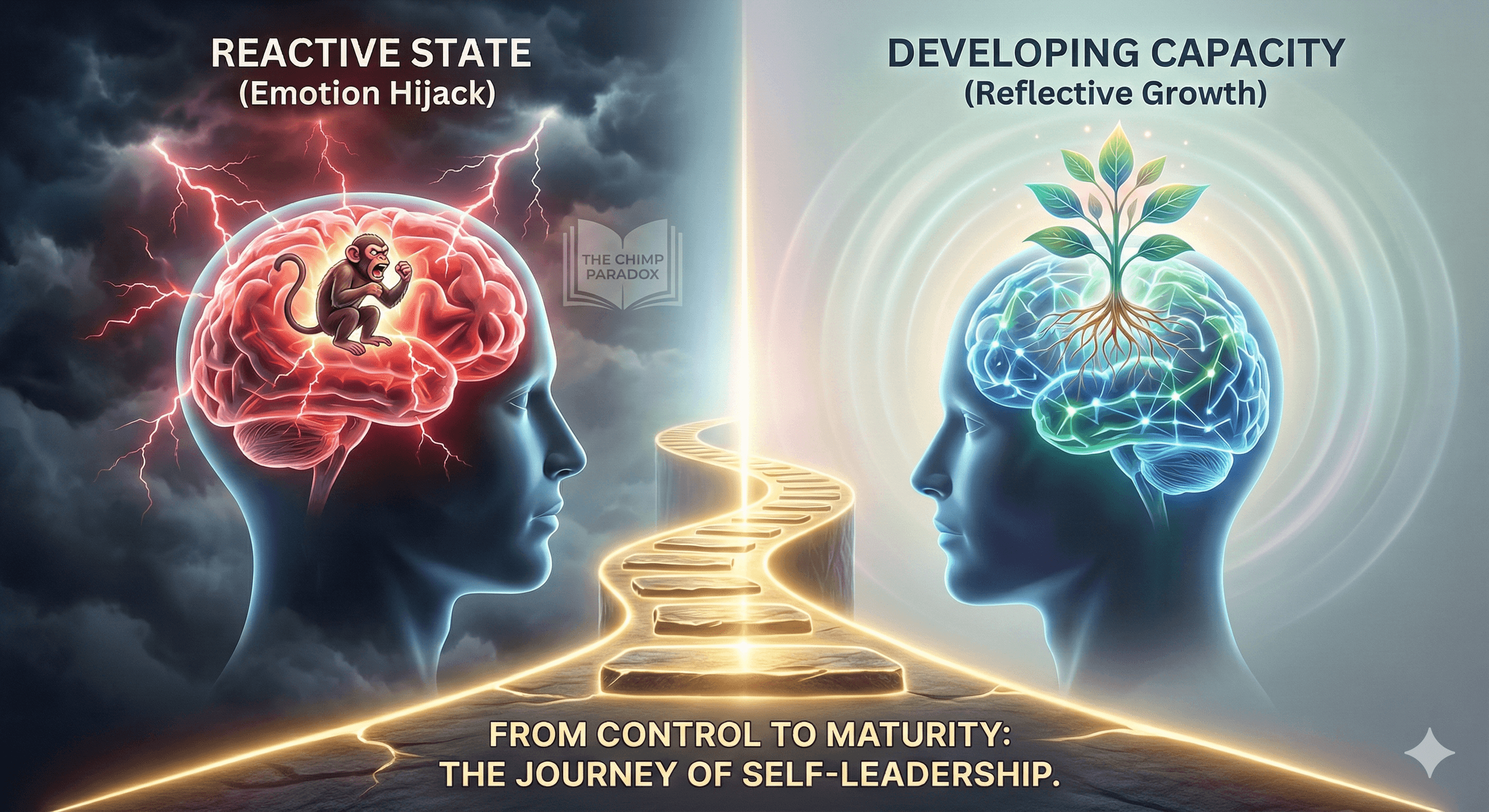
AI generated Image
If you've ever:
- Reacted in ways you later regretted
- Avoided decisions you knew mattered
- Felt confident one moment and paralysed the next
There is nothing wrong with you.
Books like The Chimp Paradox resonate because they say something deeply relieving: Your mind is not one thing — and the emotional part is powerful.
That insight removes shame. But understanding alone doesn't create change.
Why Insight Often Isn't Enough
The Chimp Paradox explains why emotions feel convincing: they arrive faster, louder, and more urgently than logic.
Under pressure:
- Anxiety sounds rational
- Fear feels factual
- Urgency overrides reflection
This isn't weakness. It's biology. Yet many people get stuck here — understanding themselves better while repeating the same patterns.
Where People Plateau
Most people try to:
- Pause
- Calm down
- Push through
- Distract themselves
Helpful — but temporary.
If you've ever thought: "I get it… but I still keep doing this," that's not a character flaw. It's a capacity limit.
MaxME's Shift: From Control to Maturity
MaxME Solutions builds on the insight of The Chimp Paradox and takes it further.
Instead of asking:
How do I control my emotions?
MaxME asks:
What inner capacities need developing so I'm less hijacked over time?
This means learning to:
- Read emotional signals without obeying them
- Recognise repeating patterns across situations
- Respond deliberately rather than react automatically
- Trust your judgement under uncertainty
These are not personality traits. They are developable capabilities.
You Are Not Your Reactions — But You Are Responsible for Your Development
One of the most powerful ideas in The Chimp Paradox is this: You have emotions — you are not your emotions.
MaxME adds the next step: Growth begins when you take responsibility for developing the system that holds those emotions.
This isn't self-blame. It's self-leadership.
Career, Confidence & Change
Many "career problems" are actually capacity problems:
- Imposter syndrome
- Fear-based indecision
- Procrastination
- Avoidance of visibility
MaxME helps you stop asking: "What's wrong with me?" And start asking: "What capacity is this moment asking me to develop?"
That question shifts you from survival to growth.
What Changes Over Time
People who build reflective capacity experience:
- Fewer emotional hijacks
- Faster recovery after stress
- Better decisions under pressure
- Stronger self-trust
- More sustainable confidence
Not because emotions disappear — but because the internal system matures.
Call to Action
If you're tired of managing yourself and ready to develop yourself, MaxME offers a structured pathway to reflective growth.
Tags:
Comments (0)
Get started
Want to explore this further?
Book a discovery call to discuss how reflective capability development can support your organisation.